

Ever since I came to America at 16, and learned some basic English to read, I have loved self-help books.
I remember when my uncle introduced Think and Grow Rich to me, I thought it was the best book ever written. I highlighted every passage, marked every word I didn’t understand, and turned my English dictionary into the Dead Sea Scrolls.
Napoleon Hill wrote with such storytelling, wisdom and conviction about how to become rich, I thought this guy must have lived in a golden palace, had the best PlayStation collection and ate Peking Duck every day – the symbol of billionaire-ness to this young Chinese immigrant’s mind.
I felt so fortunate to be one of the few lucky souls who had ever come across this manual of success. I must keep it to myself, so others wouldn’t know my secret.
Well, I later found out, much to my chagrin, I wasn’t alone in the Think and Grow Rich secret society of wealth and fame. 100 million people have read the book. And they definitely didn’t all get rich.
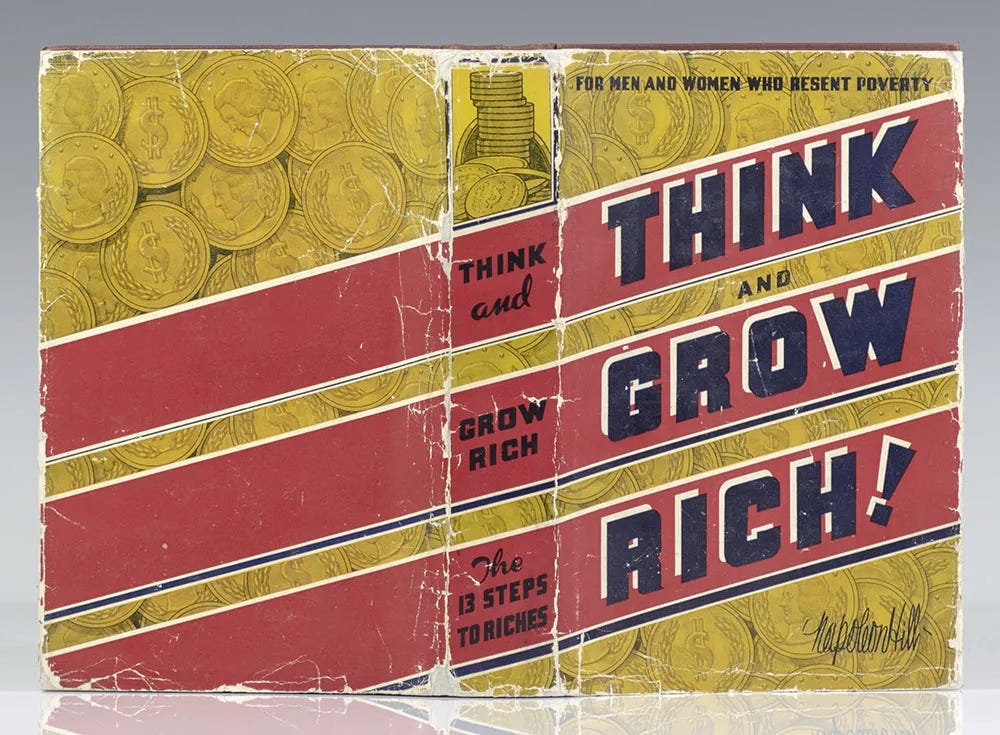
In fact, Napoleon Hill himself has been proven to be somewhat of a fraud. He likely never met Andrew Carnegie as he claimed, built a bunch of companies to scam people, and was even accused of domestic violence.
That said, Hill not being a good guy didn’t stop me from reading hundreds more self-help books over the years. And not all the authors turned out to be saints either. But the thing is: these books weren’t about who wrote them. They were about who read them – me. If I could learn a ton about happiness, mental toughness, wealth generation and new ways to see the world, then I would be stupid and overly self-righteous not to learn from others.
And the world agreed. The self-help genre (the authors in this industry hate that term, by the way) has exploded recently – 17 million books sold last year, tripling since 2013.
Over the years, we have many great authors. Many bestsellers. But here comes a big question: which one is the best? Or, which one of these ideas is the most helpful?
I know it’s an unanswerable question. Self-help is notorious for great writing and awesome feeling but without verifiable results, let alone comparisons.
Well, unanswerable no more!
For the next month, we’re going to find out. Or at least fight it out.
Ladies and gentlemen, let me introduce you to March MINDness!
March MINDness
For the next month, I will host the first and only tournament for personal development authors and their ideas.
We will borrow heavily from American college basketball’s March Madness model, which I love with all my soul and money (ask me about those Final Four trips and my sobbing retirement funds).
For the month of March, 64 authors and their most prominent ideas, matching up in a single elimination bracket.
They will be divided into four regions: Happier, Stronger, Richer and Smarter.
Every day, there will be two matchups, until the Enlightened Eight (or quarterfinals, for those of you who aren’t familiar with NCAA basketball), when it becomes one matchup per day. Each match lasts exactly 24 hours.
You, yes YOU, will decide who advances. There’s only one question: “Whose idea helped you more?” And you get to vote.
The March MINDness tournament will be hosted simultaneously on Substack (if you’re reading this, you’re already here) and LinkedIn. The author with the most collective votes from both platforms advances to the next round.
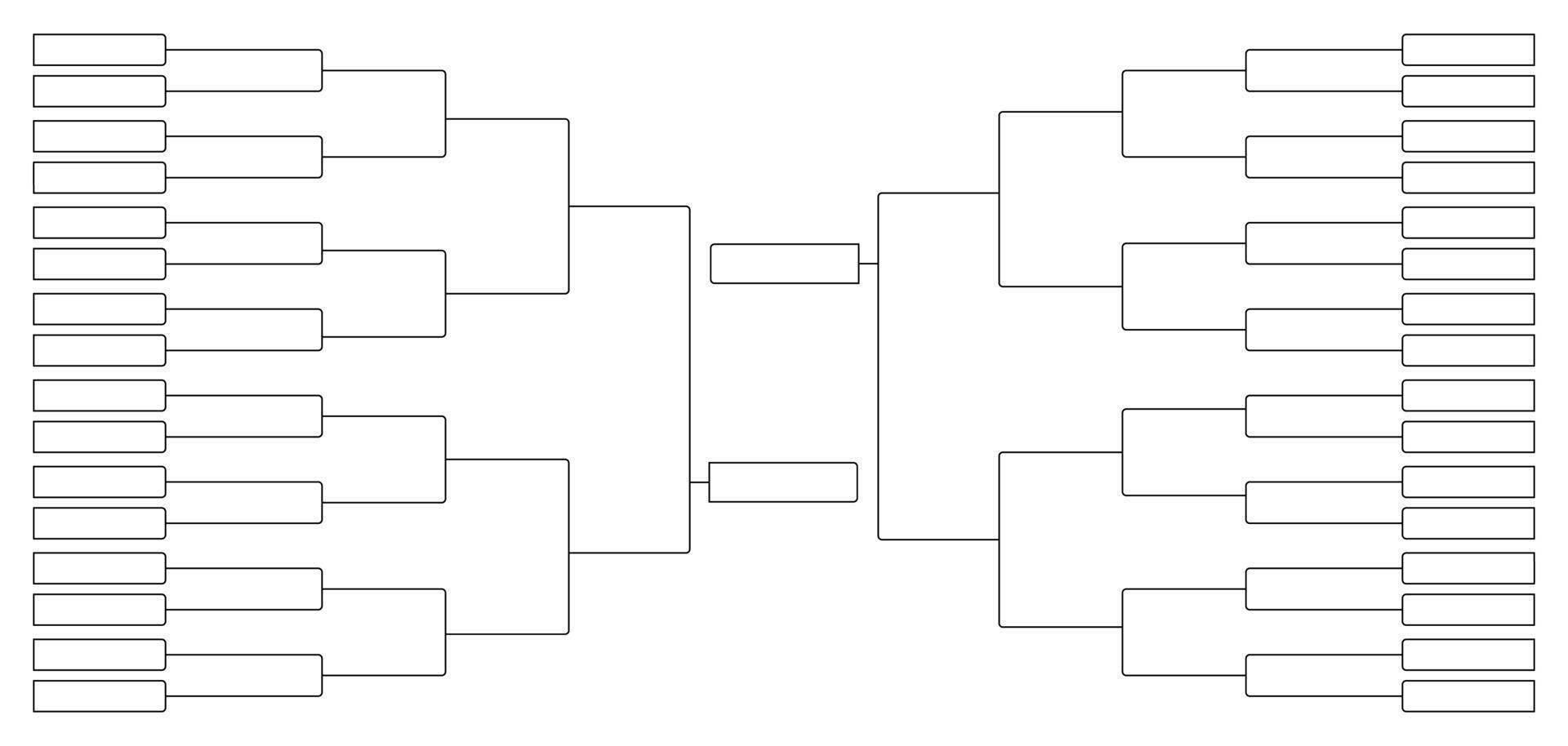
By the end, we will have answered one question: who has the most helpful idea in 2026?
So the question comes naturally: who’s in this tournament? And why?
There will be two groups: the auto-bids and wildcards.
The Auto-Bids
These are personal development authors who have written a book that has sold over 1 million copies (verifiable by me) in the past 15 years (since 2011).
That criteria eliminated deceased personal development OGs - Napoleon Hill, Dale Carnegie and Stephen Covey, as well as current stars who are still relevant but without a breakout idea in 15 years: Tim Ferriss (The 4-Hour Workweek, 2007), Ramit Sethi (I Will Teach You to Be Rich, 2009), Dave Ramsey (Total Money Makeover, 2003).
There’s another caveat: they need to be real personal development authors. If they are celebrities in other areas of life who happen to have written a memoir with self-help-ish ideas, they don’t count. So that eliminates Michelle Obama (Becoming, 2018), Oprah, and Matthew McConaughey (Greenlights, 2020). But Sheryl Sandberg is borderline. She made her name as the COO of Facebook, but Lean In has become a movement and war cry for women in the workplace, and she’s arguably known more for Lean In now. So she counts. Although both Sandberg and Lean In have received some backlash in the 2020s, we’ll let the voters decide that in the bracket itself.
So based on these criteria, the auto-bids include:
Eric Ries – The Lean Startup (2011)
Charles Duhigg – The Power of Habit (2012)
Gary Keller – The ONE Thing (2012)
Brené Brown – Daring Greatly (2012)
Hal Elrod – The Miracle Morning (2012)
Susan Cain – Quiet (2012)
Joe Dispenza – Breaking the Habit of Being Yourself (2012)
Nassim Nicholas Taleb – Antifragile (2012)
Jen Sincero – You Are a Badass (2013)
Ichiro Kishimi – The Courage to Be Disliked (2013)
Sheryl Sandberg – Lean In (2013)
Bessel van der Kolk – The Body Keeps the Score (2014)
Peter Thiel – Zero to One (2014)
Greg McKeown – Essentialism (2014)
Ryan Holiday – The Obstacle Is the Way (2014)
Marie Kondo – The Life-Changing Magic of Tidying Up (2014)
Thomas Erikson – Surrounded by Idiots (2014)
Lindsay Gibson – Adult Children of Emotionally Immature Parents (2015)
John Burke – Imagine Heaven (2015)
Héctor García – Ikigai (2016)
Chris Voss – Never Split the Difference (2016)
Angela Duckworth – Grit (2016)
Cal Newport – Deep Work (2016)
Mark Manson – The Subtle Art of Not Giving a F*ck (2016)
Ray Dalio – Principles (2017)
William McRaven – Make Your Bed (2017)
Gary John Bishop – Unfu*k Yourself (2017)
Matthew Walker – Why We Sleep (2017)
David Goggins – Can’t Hurt Me (2018)
Rachel Hollis – Girl, Wash Your Face (2018)
Vex King – Good Vibes, Good Life (2018)
Robin Sharma – The 5AM Club (2018)
James Clear – Atomic Habits (2018)
Jordan Peterson – 12 Rules for Life (2018)
Lori Gottlieb – Maybe You Should Talk to Someone (2019)
David Epstein – Range (2019)
Morgan Housel – The Psychology of Money (2020)
Brianna Wiest – The Mountain Is You (2020)
Jay Shetty – Think Like a Monk (2020)
Glennon Doyle – Untamed (2020)
Adam Grant – Think Again (2021)
Oliver Burkeman – Four Thousand Weeks (2021)
Nicole LePera – How to Do the Work (2021)
Joseph Nguyen – Don’t Believe Everything You Think (2022)
Julie Smith – Why Has Nobody Told Me This Before (2022)
Peter Attia – Outlive (2023)
Alex Hormozi – $100 Money Models (2025)
Mel Robbins – The Let Them Theory (2025)
So far, we have 48 authors who will auto-qualify for the 64-person field. I am still researching a few other authors to see if they qualify. It’s not always easy to know if their book sales numbers are verifiable or self-inflated.
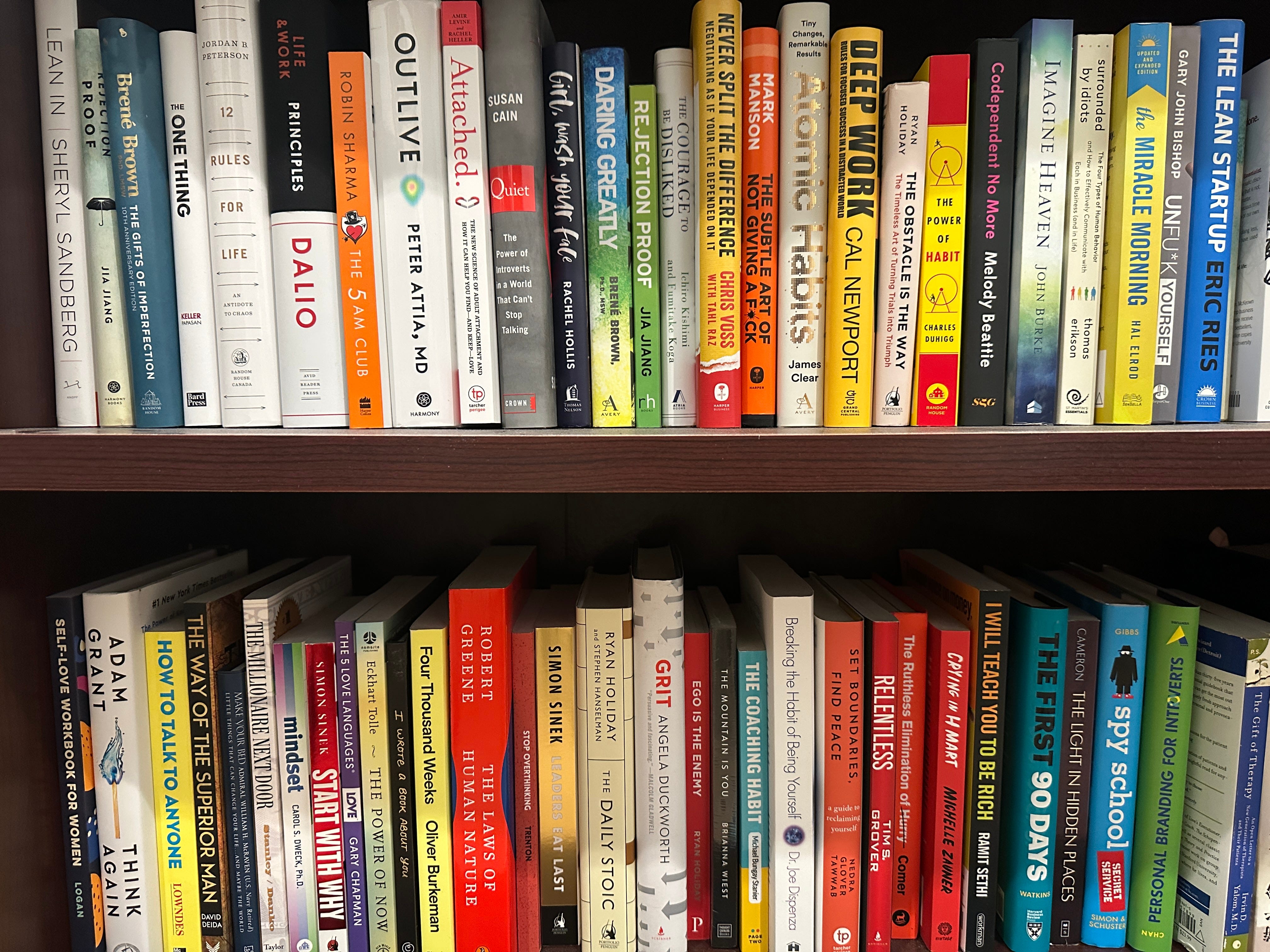
Wildcards
The rest of the field will be filled by the One Man Selection Committee - me. I will do my best to fill in authors who have written great books in the past 15 years but whose sales might not have topped 1M - Sahil Bloom (The Five Types of Wealth, 2025), Scott Galloway (The Algebra of Wealth, 2024), and Kim Scott (Radical Candor, 2017).
I might even bring back the group I eliminated first - relevant authors whose books came out before 2011 but who are still extremely relevant: Tim Ferriss, Malcolm Gladwell, Carol Dweck, Daniel Pink, Dan and Chip Heath, Ramit Sethi.
I am still thinking this through. If you have an author whose idea has impacted you but they’re not on the list yet, let me know. I’m listening to suggestions before this Saturday.
Selection Saturday
Speaking of this Saturday (2/28), it’s called Selection Saturday. I will reveal the entire bracket for these authors and their ideas, along with their seedings. This will be the first-ever bracket for personal development authors, so expect controversies and errors. That’s part of the fun.
Voting Schedule
First Round (Round of 64): 3/1–3/16
Second Round (Round of 32): 3/17–3/24
Sage Sixteen: 3/25–3/28
Enlightened Eight (Quarterfinals): 3/29–4/1
Foundational Four (Semifinals): 4/2–4/3
The Final: 4/4
March MINDness will crown its first and only winner on April 5, 2026.
May the author with the best idea win.
For You:
Watch for the bracket reveal this Saturday, 2/28/2026, at 10am ET.
If you have friends who are self-help junkies like me, forward this email to them.
If you have authors you’d like to include in the field, reply and make your case.
Atomic Habits by James Clear has definitely been a system that keeps coming back ever since I read the book (I didn't actually; I watched a 30-minute summary video. Call me a fraud). That'd be the candidate I suggest.
Brilliant idea! Can I nominate Michael Bungay Stanier, author of “The Coaching Habit” (over 1 million sold) 🤞