

Today is day 17 of 100 Days to 10,000 Copies, my project to launch my new book - Easy Discipline (Amazon, Barnes & Noble, Audible).
WHAT I DID
Things I get asked the most nowadays:
What’s going on with your face? Your skin looks… better!
Do you still do Rejection Therapy?
Answer to #1: I had never cared for how I looked for 30 years. But then I picked up a facial lotion in Japan, and daaaaaamn!
Answer to #2: Yes! But I no longer get on the street asking strangers for $100. Instead, I turn that spirit into my everyday business. In fact, what I am doing here, asking the world to buy 10,000 pre-order copies of my book, is another Rejection Therapy in public.
Moreover, I take very real business rejection as an opportunity to practice my skills.
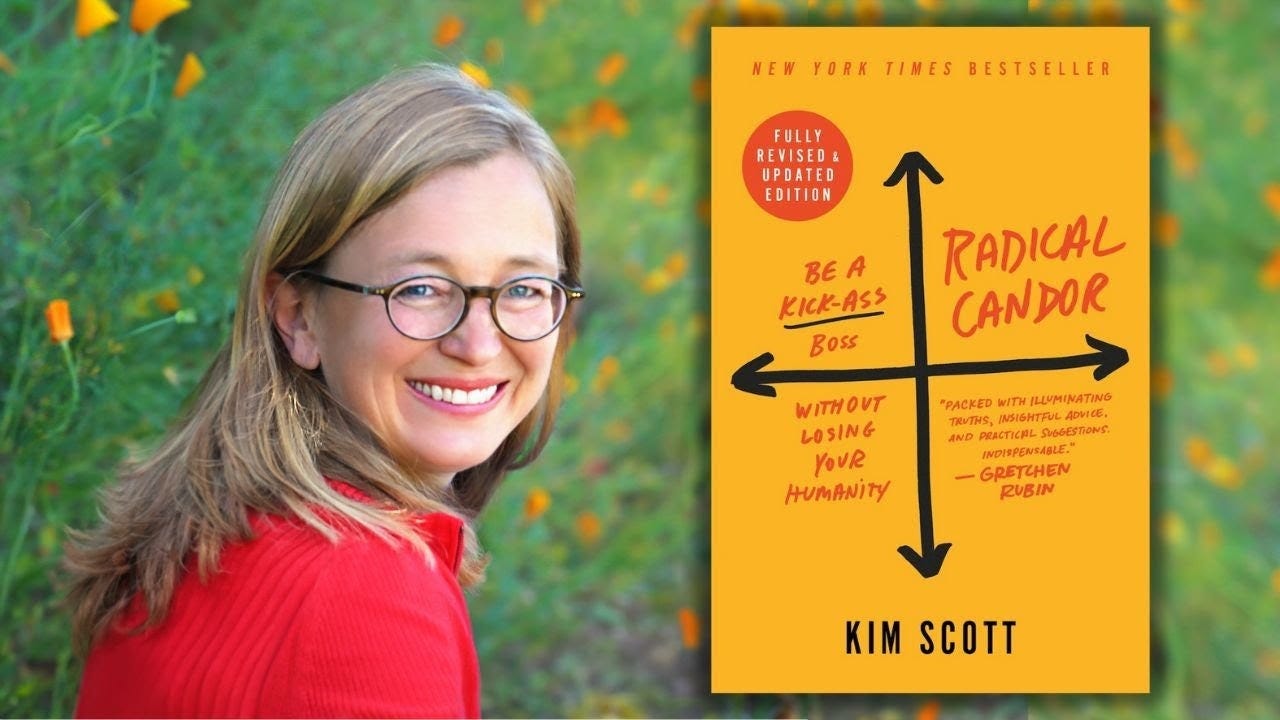
For example, I just got rejected by the podcast team of Kim Scott, the author of Radical Candor. For most rejections, I just move on. However, for Kim’s podcast, I wrote a post-rejection letter. I always do so with people and companies I care about. I am a fan of Kim’s book, and thus the letter.
Dear Kim,
It seems a conversation on the Radical Candor podcast isn’t going to work out. But as the “Rejection Guy,” I’d be remiss if I didn’t use this moment to let you know the impact of your book.
I read Radical Candor when it first came out. Of course it was an amazing book. But one line in particular I still remember today:
“Time and again, I have seen that it was kinder in the long run to be direct, even if articulating my criticism caused some momentary upset.”
My job is to teach people to be fearless in engaging others through Rejection Therapy. That said, the East Asian part of me still pulls me back. I sugarcoat. I go indirect. Sometimes I lose the moment.
Your book gave me a moral reason and a practical tool to push past that, which has been liberating.
My publisher is pitching me to a lot of shows right now. Yours is one I personally cared about reaching out to.
My new book, Easy Discipline (Simon & Schuster, 7/14/2026), has a section called “The Artist Mindset” that I think you’d find interesting when it comes to achieving Radical Candor. Most people fear direct conversations because they see them as a chore. People with artist mindset embrace them, because they see them as art.
I’d want to talk about:
How to lean into every moment in a conversation, even tense ones, as an opportunity of creation
How to use role-play to turn fear into curiosity
How I went from dreading pre-decision sales calls with speaking clients to closing every single one
I think you’d love the conversation.
And if it doesn’t work out, I’ll add the rejection from Kim Scott as a badge of honor…
I’d rather have the conversation, though.
Best,
Jia Jiang
EASY DISCIPLINE PRINCIPLE - Don’t Waste a Rejection
Will I get a change of heart from Kim’s team? I don’t know. But by writing this letter, I gave myself another shot. Even if it went from 0% to 10%, that’s a 10% I didn’t have.
More importantly, I genuinely admired Kim’s work. I want to use this opportunity to let her know it. The writing of this letter is me having a good time.
I once read a letter from director Jon Chu, the renowned director of Wicked. The movie that made him a household name was Crazy Rich Asians in 2018. He badly wanted to use Coldplay’s song “Yellow” as the closing score.
However, fearing potential accusations of turning their song’s title into a slur, and already experiencing cultural appropriation and stereotyping backlash with their song “Hymn for the Weekend,” Coldplay refused.
But instead of taking the rejection and moving on, Jon Chu wrote a letter to Coldplay. Within 24 hours, Coldplay wrote back and approved the request. And thus the awesome (albeit pretty cheesy) ending.
Now, is my letter as good as Chu’s? Of course not. It’s not a tear-jerking contest. And his lived experience with the song is much deeper than mine with the book.
That said, I am inspired like a rooster fed with Red Bull by Chu’s letter. It reminds me not to waste any rejection as an opportunity to express myself, whether it’s my genuine admiration for the rejector or appreciation for their time.
FOR YOU
Try this. Take a rejection you’ve received in the past 6 months. If the request was meaningful to you, and the rejector wasn’t mean when saying no, write them a letter thanking them for their time, give them an upgraded proposal, and ask them to reconsider.
When you write that letter, treat the act of writing as the goal, not the potential result. Have fun writing!
And don’t forget to tell me about it.
Jia,
Hope all is going well. I follow https://www.cemeterydance.com/ and got an email about getting a free copy of a new Stephen King novel. I replied and was sent the following reply
I immediately thought of you and your 100 Days of 10,000 Copies
Maybe there is an author or an organization you can partner with to help in getting pre-orders
Andrew
Thanks for emailing!
Here's the deal...
Pre-orders are critical for any book's success and we're working hard to drive up the numbers for KILLING THE BOOGEYMAN by Richard Chizmar. So...anyone who pre-orders KILLING THE BOOGEYMAN will receive a FREE bonus hardcover edition of Stephen King's & Peter Straub's upcoming novel, OTHER WORLDS THAN THESE (reg cover price $35). We will even pay postage within the U.S.
But that's not all...you will also receive a custom full-color BOOGEYMAN bookmark and a signed bookplate completely FREE.
KILLING THE BOOGEYMAN order link: https://a.co/d/0ejGSVG6
RULES:
* Email your pre-order confirmation, along with your name/address to cdancepub@aol.com
* Only brand new pre-orders (dated today forward) qualify for this special offer
* Yes, you may participate and pre-order additional copies even if you've already placed a pre-order for a different special offer. They make great gifts!
* You may pre-order up to 3 copies of KILLING THE BOOGEYMAN to receive 3 free copies of OTHER WORLDS THAN THESE.
* Postage is FREE for U.S. orders (Canada is $30, Overseas is $50, to be paid via Paypal to cdancepub@aol.com)
* Our Amazon representative keeps close tabs on all pre-orders. Please don't be that person who pre-orders for a free bonus item, and then cancels the order.