

The Super Bowl is over. The Seattle Seahawks beat the New England Patriots so bad even King George III might have felt sorry. Sam Darnold, the Seattle QB, completed one of the most amazing career turnarounds since Robert Downey Jr., going from being abandoned by four teams to hoisting the Lombardi Trophy. And Drake Maye, the young Patriots QB, prodigy and proclaimed Tom Brady successor, had as bad a night as Nicolas Maduro did in his palace.

Now, I love sports. Too much so, to be honest. I often wondered what kind of amazing inventions I would have come up with or diseases I would have cured had I not spent hundreds of hours watching sports every year.
But there is one silver lining – sports is a treasure trove of life lessons – the discipline to perfect skills, the will to win, the building of a team and culture. In business, sports-based idioms never go out of fashion. In 100 years, you will still hear CEOs talking about “homerun acquisitions” and “slam dunk decisions”.
That said, sports can also be sources of terrible, horrific and life-destroying lessons. If you learn the wrong lesson, you will be unhappy, unfulfilled and probably end up with hemorrhoids. Today, I will list out some of the most common lessons sports fans throw out, and why you should avoid them like eggplants (ask me why I hate eggplants).
Bad Lesson 1: The Ending Means Everything
The New England Patriots had an amazing season. Last year, their record was 4-13. In the offseason, they hired a great coach – former Patriots linebacker and legend Mike Vrabel. The new coach installed a winning culture and a toughness in the team, and had one of the greatest season-to-season turnarounds in NFL history, finishing 17-3 and going all the way to the Super Bowl.
Yet, they had a bad day last night. If you turn on ESPN and the hundreds of sports talk radio shows around the country today, you would have thought they were the greatest joke in the history of sports. Their players, coaches and even owner are getting mercilessly trashed like the leftover pizza at your party last night. It was as if all the successes the Patriots had this year were simply providing the backdrop for the ultimate failure.
This is not even the biggest disappointment for the Patriots. The 2007 New England Patriots went 18-1, with the only loss coming from the Super Bowl. They will forever be remembered as one of the greatest what-could-have-beens in sports. The 1991-1994 Buffalo Bills were worse - going to four straight Super Bowls, but lost in all four. They are forever remembered as the greatest waste of talent and opportunities in NFL history.
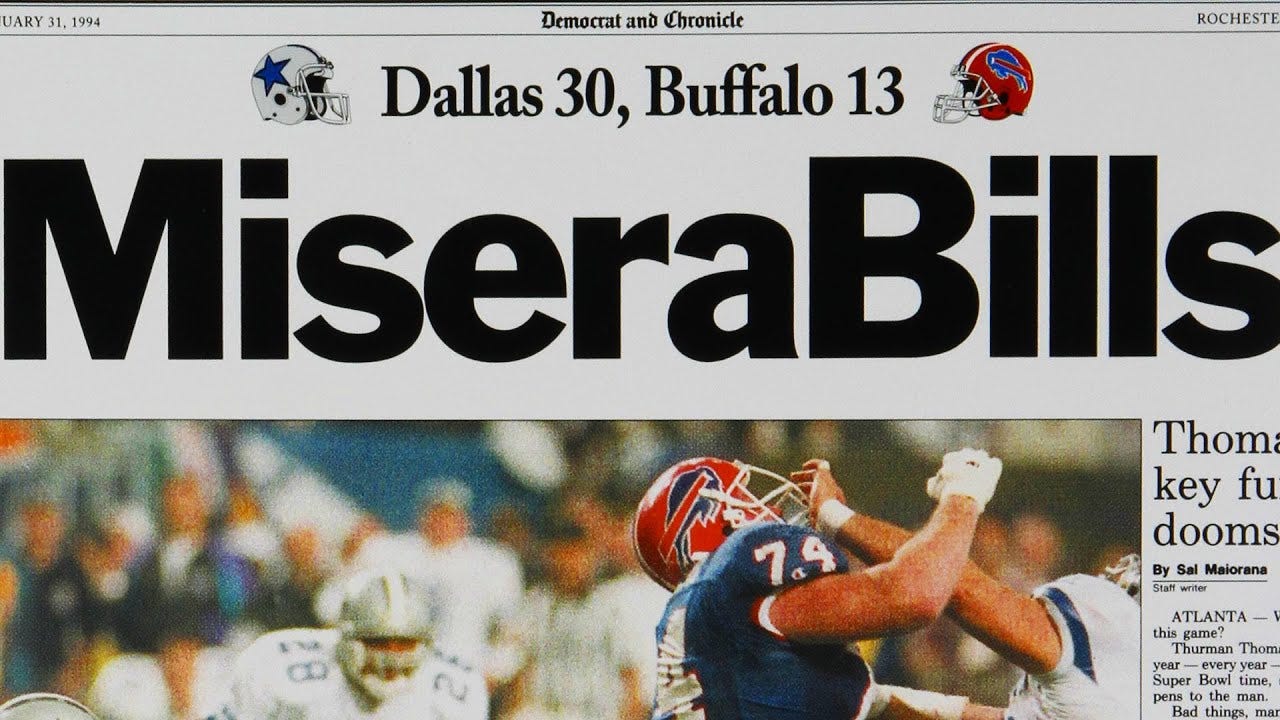
This happens to all kinds of utterly dominant teams who failed to win it all in sports – the 1984 Soviet Hockey team, the 2015 Kentucky Wildcat basketball team, the 2016 Golden State Warriors, to name a few.
In the book The Power of Moments, authors Chip and Dan Heath talked about how human brains are especially designed to capture two kinds of moments – the peaks and endings. In a trip to Disney World, you forget about the mind-killing flights and soul-sucking waits in lines. You remember the screaming in the air as your boat drops in Splash Mountain (peak). You remember the last pictures you take as you walk out of the park full of smiles (ending).
But in sports, our brains get hijacked by the ending, and the peak and process don’t matter that much. The regular seasons are almost meaningless. All that matters is the playoff results – and for every team good enough to make it to the playoffs but didn’t win it all, it ended in one thing – a heartbreaking loss. And that loss, especially later in the season, often erases the entire seasons of effort and happiness.
It doesn’t matter how it went. All that mattered is how it ended.
And that’s an awful lesson for life.
You shouldn’t just remember how things end in life – school, your job, marriage, and life itself. In the movie Cocktail, Tom Cruise famously said “everything ends badly — otherwise it wouldn’t end” when breaking up with his girlfriend Bonnie.
If all you remember is the ending, then you will define your life by disappointment, bitterness and failures. That’s not a way to live, and not a way to see life.
Instead, we should all focus on the peaks and highlights – the impossible project you have accomplished, the heartfelt adoration your audience gave you, and the handholding sunsets you’ve experienced with your partner. The ending might suck, and they usually do, but the highlights should be remembered, cherished and defining.

So for all the Patriots fans who are ready to stick your head in an oven today, let me try to flush the terrible sports lesson out of you. This was a GREAT year for you guys. You won 17 games and went to the freaking Super Bowl! If you want to remember, remember how your 23-year-old QB got your team a win in the crazy snowstorm in Denver. That should define your season.
No, I am not here to make you feel better. I am teaching you how to live your life as a happy human, not just as a sports fan.
Bad Lesson 2: The Scoreboard Judges Winning
Sports is one of the only things in life that you do your thing, and when you are done, there is something that tells you whether you have succeeded or failed – the scoreboard.
If you give all the best you can and come out losing, you are disappointed. If you half-ass your way through but come out winning, you are happy.
But in life, being scoreboard-driven is an insanely bad lesson and the cause of much personal discontent and societal issues.
Because just like sports, there is one thing that’s as obvious as the scoreboard in sports – money. You cannot disregard your bank account. You cannot ignore net worth. Because they are measured in numbers, people often treat them as important as the scoreboard in sports.
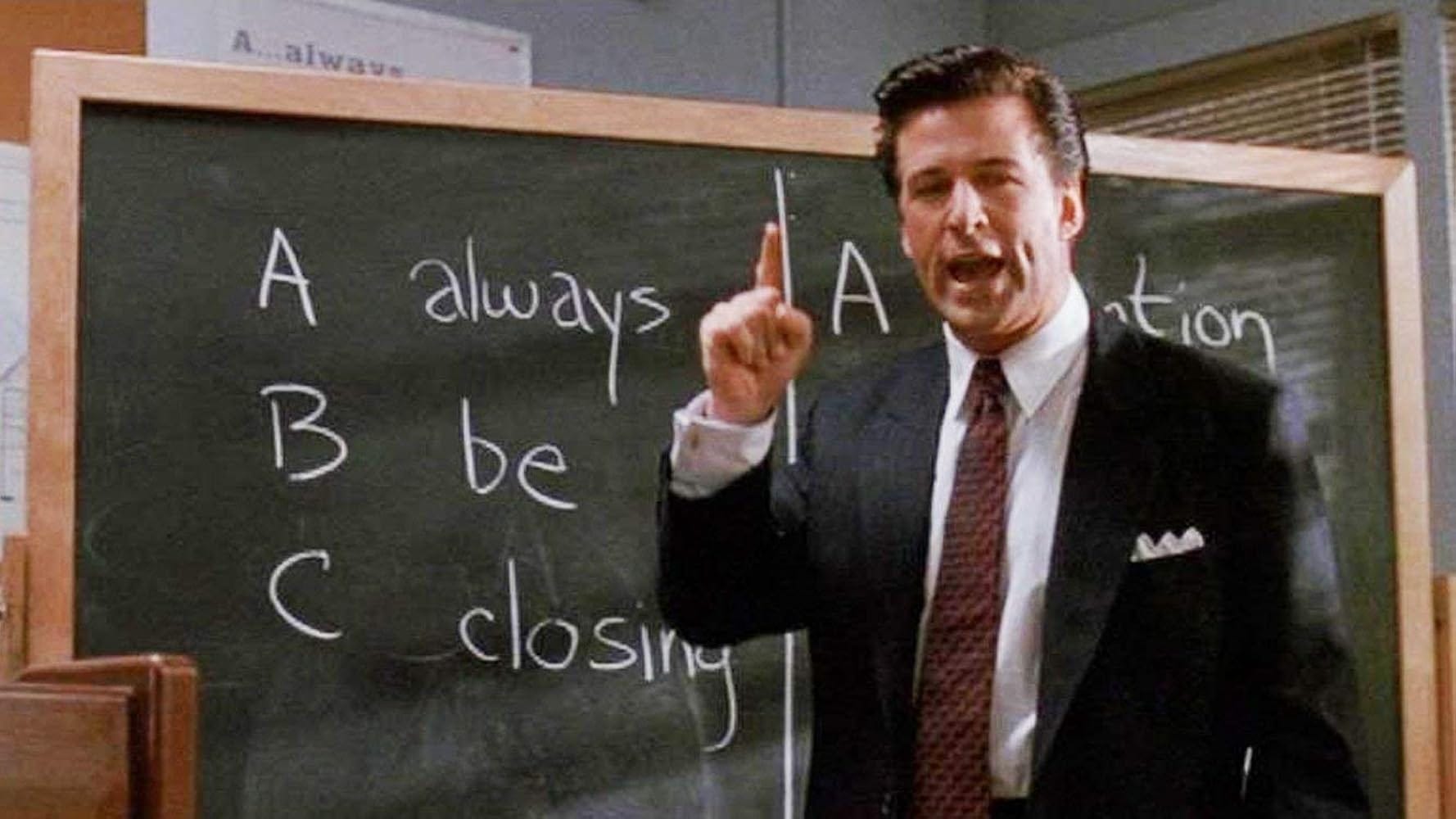
In the famous scene in Glengarry Glen Ross, Alec Baldwin’s character gave his Always Be Closing speech. I know many people in sales watch this scene for motivation, wanting to get fired up before they start their sales pitch.
I, on the other hand, use this speech for a completely different lesson.
In the scene, Baldwin thoroughly belittled Ed Harris by showing off his $970,000 income, then said:
“You see pal, that’s who I am, and you are nothing.
Nice guy? I don’t give a shit.
Good father? Fuck you, go home and play with your kids.
You want to work here? Close!”
Baldwin's only scoreboard was money. In 1992, $970K was about $2.2M today, adjusted for inflation. Very impressive indeed!
While I care about money (I would be lying if I said I didn’t), there is something I care about more – something without a scoreboard.
My relationship with my kids.
When my kids were little, I struggled parenting them. I thought kids were cute for minutes, annoying for hours, and boring for eternity. So I gravitated toward working rather than parenting.
But I really, really wanted to be a good father. When I watched this scene and saw Baldwin’s line “Good father? Fuck you, go home and play with your kids.”
I thought: that’s a great parenting lesson! Maybe I just need to play with them more.
So I came up with strategies to play with them one-on-one, with one goal in mind – having fun myself. If I can have fun, I’ll spend more time, and I can be a better father. Over the years, I became a much, much better father by playing with them.
Thank you, Alec!
Now, your relationship with your kids has no scoreboard (you can’t walk around with five-star reviews given by your daughter). Neither do health, marriage happiness, freedom to spend your own time, pursue your own dreams. But if you ask older people, they will often tell you these things are much more important than their bank account.
So if you live your life with a scoreboard mentality, you’ll spend all your time chasing after money, often at the expense of other meaningful things in life.
Does your Bank of America account say that you are winning? Good! Just don’t make it your scoreboard.
Bad Lesson 3: Rooting for Your Team
I am flying out of San Francisco airport this afternoon for a speaking engagement. I see travelers in jerseys and hats everywhere. Mostly Seattle Seahawks fans, and some brave Patriots fans. Of course, it’s always happier to gloat when your team won. But all these people have one thing in common – they have all spent a fortune to cheer for their team, because their team represents them.
But do they?
Honestly, sports fandom is pretty weird. I am a hardcore fan for multiple teams in multiple sports – college and pro. I feel I live and die with how my teams do. But why? I have never figured it out myself.
Do these teams represent who I am, other than being my schools and my residence? Why do I have to support teams when the players don’t play hard and coaches/managers make bad decisions? Why am I rooting for these jerseys regardless of the character of the people wearing them? Why is it considered a virtue to support a team through thick and thin? Why am I taking joy more from the suffering of my archrivals than the victories of my own team?
WHY?
I don’t know. I just do it anyway. It’s just sports.
But in life, fandom is the cause of much, much evil in both the world and our own lives.
Our world is divided, because our countries, races, political parties and ideologies become the ultimate teams.
In 2013, a guy and his family were mercilessly chased down and attacked by a motorcycle gang in New York City. When I first saw the news, I thought “wow that’s terrible.” Then I saw the victims, a person named Alexian Lien and his family, I was more upset than usual. Why?
Because I saw they were Asian American, just like me. At that moment, my team-rooting fully kicked in. I started having ill-wishes toward the attackers. I hoped the legal system would bring justice in the case.
Then I caught myself – man I am jersey-worshipping here! I have nothing in common with this man except we are of the same race. And that shouldn’t have defined how I felt. I shouldn’t be angry because of his skin color, I should be angry because of the crime and violence. I should feel the same if the races were reversed. In fact, I should feel the same for every person who has suffered this kind of injustice at the hands of another person in this world, regardless of how they looked.
Jersey rooting, whatever the jerseys are, sucks outside of sports. It makes the world a worse place. The result is we are hyper-alert and often highlighting the wrongdoing of the other team, while ignoring and justifying those from our own. We demonize the other people for no reason other than that they are on the opposite side. We value the winning of our tribe more than the overall well-being of the society and world. We even take pleasure from the failure and suffering of our rivals.
It also brings so much unhappiness in our own lives. When our days are consumed by news and social media, echo-chambering that the other side is the source of all evil, when “owning the libs” and “dunking on MAGA” become real life sports, our lives become an arena of misery and emptiness.

Now I still love sports, too much in fact. But in the end, they are just entertainment, reality TV shows put on by athletes. And one thing you know about shows – they are not real lives. And the worst thing you can do is to live your life the same way you watch sports.
Can't wait for your new book to come out. Can we pre-order yet?