Your job title might not say it, but if your life involves persuading someone, whether to buy a product, adopt your proposal, or pick the restaurant of your liking, you are in sales.
But are you good at it?
If you aren’t, you are not alone.
I used to hate sales.
When I started in my speaking career, I would get on a lot of “pre-decision calls” with potential clients. It’s like an interview, but instead of getting a job, it’s for a speaking gig. The potential clients would fire off a bunch of questions, getting to know me, and trying to predict if I could own the room and get a standing ovation, or pee my pants and crawl off the stage.
I LOVE speaking. But I hated, HATED these calls.
Because the stakes were high - between getting paid five figures to inspire like a superhero, or watching Game of Thrones in my underwear that night.
Before the calls, I rehearsed everything like a doomsday prepper. But during the calls, my nerves would seep through my veins. To say the right thing, I would watch their Zoom faces for every nod or frown, hoping to contort myself into something appealing.
The results? I counted my closing rate. It was about 18%. I should have just karaoked throughout the Zoom, the result would have been the same, and probably better.
That was until I learned and mastered the Artist’s Mindset, the “A” in EASY Discipline.
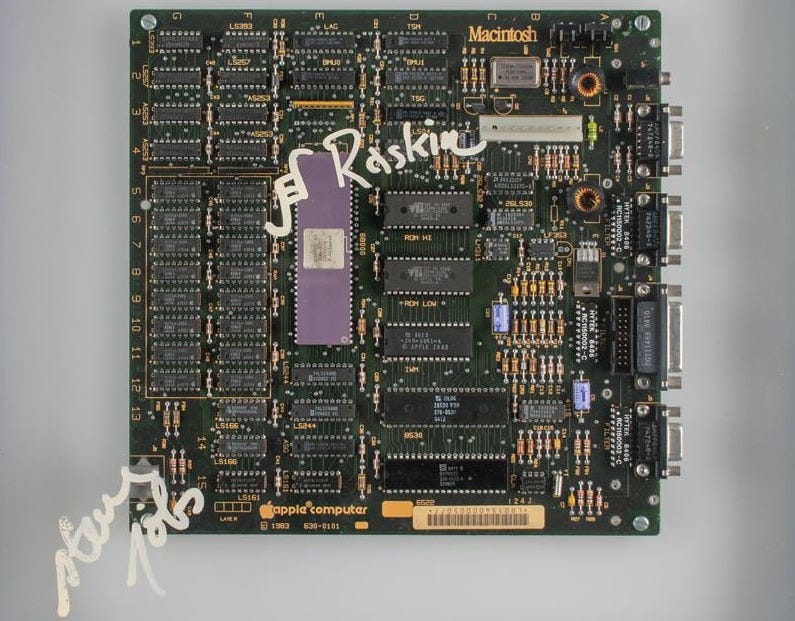
There’s a story I put in the book that explains it better than I can. It’s about a circuit board, of all things.
In 1981, a team of Apple engineers finished the circuit board for the original Macintosh. They’d been working day and night. Steve Jobs walked in to see it.
He picked up the circuit board, but instead of turning it on, he turned it over in his hands and stared at it silently, the way a jeweler might grade a stone.
Finally, he said, “This is ugly.”
“What do you mean?” a brave engineer asked.
“It looks messy. The wires and chips all look uneven. It needs to be redesigned and needs to look beautiful.”
“Beautiful?” the engineer said. “Nobody’s going to see the circuit board. It’s inside the product.”
Jobs replied: “I don’t care. When you’re an artist, you care about every detail. Even the ones that no one will see.”
Months later, when the team came back with a version that satisfied him, Jobs hosted a signing ceremony and had every engineer sign their name, to be engraved inside each machine. Because “real artists sign their work.”
This needed to look beautiful because it was art
Steve Jobs is one of the most studied and quoted people in modern business. He reached the top of three industries: computing (Apple), animation (Pixar), and yes, public speaking (check out the most famous speech ever given by a businessperson).
But what catches me is not his accomplishments, but his mindset.
The word he used when describing himself, again and again, was “artist”. The story above shows his Artist Mindset in action: doing something for the beautiful process that delights himself, not just the customers. In this case, the customers couldn’t even see his work. He did it anyway, because HE cared.
The Artist Mindset completely changed how I conduct business, whether on stage speaking, writing, or doing these “pre-decision” calls. I started seeing myself as a conversation artist, not a salesperson.
Instead of trying to find the words that delight the potential buyer, I aimed to delight myself first. I asked:
Am I saying things that inspire me?
Am I being the real me, the crazy and fun guy?
Am I having a good time and cracking myself up?
With these questions, my sales calls turned from 30 minutes of word salad disasters into pieces of art made of voice and laughter.
I no longer worried about the words. I no longer feared the result. Because an artist leans into the moment and has no fear.
What’s my new closing rate for these calls? I am still counting. 94.4%. (I did just lose a deal because of budget. Otherwise it would have been 100%.)
When you no longer fear the result, you get better, much better results. That’s the paradox of the mind. That’s the Artist Mindset.
So, for the next “sales” effort you are doing, asking for a raise, making a sales pitch presentation, or simply striking up a conversation with someone in your office, try this.
Lean into the moment, think like an artist, and aim to delight yourself. See what happens.
PS. My email yesterday blew up the Books Inc. webpage. The launch party in Mountain View, California is sold out. But, the guy who did Rejection Therapy can’t let it go. I’m asking them to add more room and tickets, either by rearranging the furniture or buying a bigger store in 6 days. If you want to come but can’t get a ticket, stay tuned!